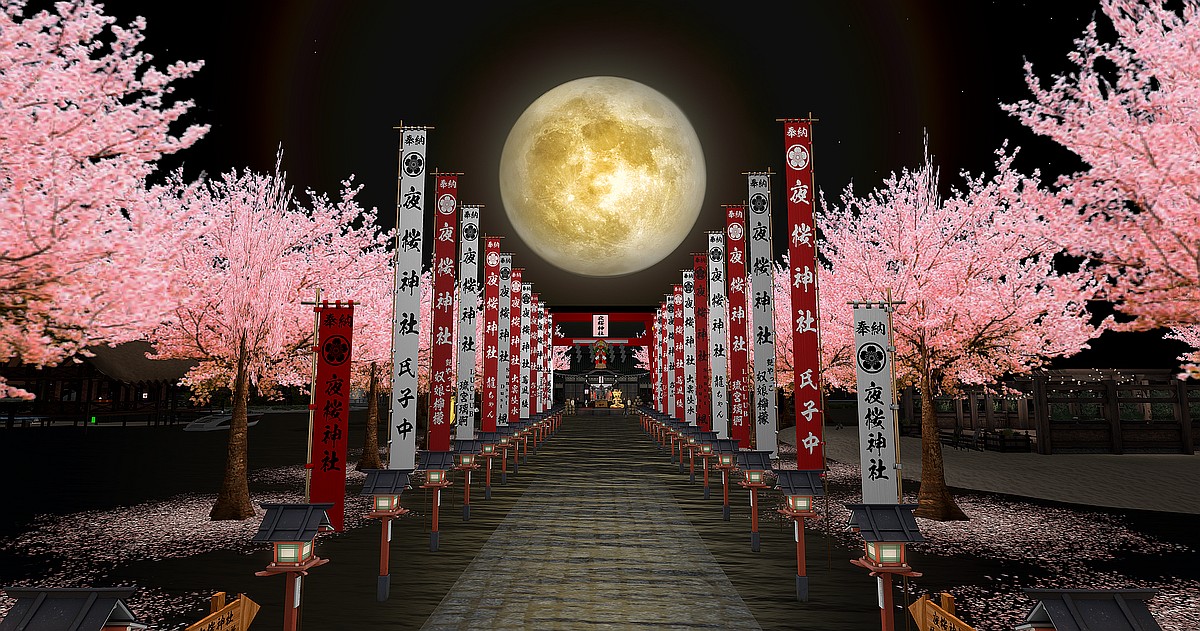

An introduction to a Japanese tradition
I have always found that some Second Life experiences invite quiet attention rather than spectacle. The Goshuin Project is one of those. It offers a thoughtful way to explore Japanese culture through virtual shrines and temples, while collecting something small, personal, and meaningful along the way.
The idea is simple but beautifully considered. Visitors travel between participating shrines and temples in Second Life and collect Goshuin, virtual versions of the calligraphic red seals traditionally offered at real Japanese religious sites. Each stamp marks a visit, a moment, and a place, rather than a task completed.

What are Goshuin stamps?
In Japan, Goshuin are handwritten seals given at Shinto shrines and Buddhist temples. They usually include the name of the shrine, the date, and carefully brushed characters, all arranged in a distinctive style. Every shrine has its own design, which makes each Goshuin unique. Traditionally, they are collected in a special book and kept as a personal record of visits.

The word Goshuin translates as honourable red seal, and that sense of quiet respect carries through into the Second Life project. These are not souvenirs in a commercial sense. They feel more like gentle reminders that you were present and took the time to look.
The Goshuin Project in Second Life
The Goshuin Project is organised by Sakka Flow, who explains the background and intention of the project on the official website. The aim is not only to recreate shrines, but to encourage slow exploration and appreciation of Japanese spiritual spaces within Second Life.
There is a growing list of participating shrines and temples, each offering its own Goshuin. Some are set in peaceful forested regions, others sit within more formal temple grounds. Although they differ in design and atmosphere, they share a sense of calm and care.
As I moved between locations, I found myself paying more attention than usual. The sound of water, the spacing of lanterns, the way light falls across stone steps. These are places that reward lingering rather than rushing.

Seeing more clearly
Until recently, I have had mixed feelings about visiting Japanese regions in Second Life. The architecture, the customs, and the fashion create a strong sense of wonder, even fascination, at being somewhere so different from the world I know. At the same time, that difference could feel distancing.
It was rather like standing outside a building and looking in through a dirty window. What I could see looked interesting and inviting, but the details were hard to make out, and I never quite felt part of what was happening inside.
Recently, that feeling has begun to change. Using tools such as Google Lens has helped deepen my understanding. Translating signs and written details allows the environment to reveal more of itself. Shrine names, dedications, and offerings become part of the story rather than decorative elements alone.
With that understanding comes a quieter pleasure. It feels as though I have stepped inside, where it is warm, unhurried, and clear, and where I can finally take my time and look properly.
Encounters along the way
Another pleasure of exploring places like Yozakura Jinja is the people you meet. While wandering the shrine grounds, I encountered a small group of Japanese avatars, all dressed in playful party costumes. One was a dragon, another a banana, another a hot dog.
We spoke using a mixture of English and translation tools, exchanged greetings, and wished each other a Happy New Year. At their suggestion, we paused for a group photograph. I stood in the middle, hurriedly dressed as a tree, the most mildly amusing avatar I could find at short notice.

It was a small, happy moment. Encounters like this are part of what makes Second Life special. You meet people you would never encounter otherwise, share a smile, and move on carrying that warmth with you.
Why it is worth exploring
The Goshuin Project does not rush you. It invites quiet curiosity and gentle wandering. Even if you know little about Japanese religious traditions, the experience feels welcoming rather than instructional. You can explore, collect, observe, and reflect at your own pace.
For me, it has become not just a journey between shrines, but a way of slowing down and paying closer attention. It is very much worth a visit.
Useful Links
Goshuin Project – Official Website – Website is in Japanese by default, but English is available via the top selector.
Goshuin Stamp Project Flickr Group

If you’d like to see more places like this, follow my blog, Exploring Second Life, where I share both the grand builds and the smaller “quick stops” that make the grid so rewarding.
Join us in the Second Life Destinations Facebook Group, where bloggers share new finds.
Photographers: post your snapshots in the Second Life Destinations Flickr Group.