The horseshoe shaped bay at Sable Noir, where black volcanic sand meets the sea and a half sunken submarine adds a note of mystery
Some regions in Second Life make an immediate impression through colour and light. Others draw you in through atmosphere and sound. Sable Noir belongs firmly to the latter, a place that feels alive from the moment you arrive, restless, dramatic, and quietly seductive.
Two tortoises at Sable Noir, a small detail from the island’s abundant wildlife.
A Volcanic First Impression
Resembling a horseshoe, Sable Noir Island rises from the sea as a tropical haven of black volcanic sand.. The landscape tells its story clearly. Fire shaped this land. At the heart of the island sits the remains of a dormant volcano, its summit now holding a pool of water teeming with life, while offshore to the north an active volcano smoulders, sending a constant reminder of unrest into the sky.
A brightly coloured frog rests on a lily pad, one of many small discoveries at Sable Noir.
Storm, Sound, and Atmosphere
The weather plays a major role here. Storm clouds roll overhead, thunder rumbles almost continuously, and rain sweeps across the island in sudden bursts. It is thoughtful touches like these that show the care behind the design. Near the arrival point, the region owner and designer Aɴᴀsᴛᴀsɪᴀ Jᴜʀɪʏᴀ has even provided a free umbrella, a small but welcome detail that immediately sets the tone.
A stream flows down from the dormant volcano at Sable Noir, cutting through dense tropical vegetation.
To appreciate Sable Noir fully, it is important to use the shared environment settings and to have sound enabled. Waves crash against the shore, thunder echoes across the landscape, and tropical birds call from the trees. At times, there is something more haunting, the distant song of a siren drifting through the air, adding a touch of mystery and unease.
A quiet moment at Sable Noir, with tea, birds close by, and a lemur wandering through the scene.
Hidden Details and Living Wildlife
The land description hints at hidden, playful spots scattered across the island. In fact, they are indeed there, discreetly tucked away and using modern animations. However, even setting those aside, Sable Noir stands on its own as a beautifully crafted tropical environment. Furthermore, the flora is lush and varied, and the wildlife is particularly impressive. For instance, many bird species inhabit the island, including several I haven’t seen elsewhere in Second Life. In addition, you will also find reptiles, amphibians, and even a lemur.”There is nothing here which feels inappropriate for a remote volcanic island.
A blue hummingbird in close up, one of the many bird species found across Sable Noir.
A Place to Explore and Return To
What is especially surprising is how much is concealed within a landscape that is relatively low lying, aside from the volcano itself. Paths twist away, details reveal themselves gradually, and exploration is consistently rewarded. Listing everything would spoil the pleasure. This is a place best discovered at your own pace.
Statues and wildlife at Sable Noir
Why Visit Sable Noir
Sable Noir will naturally appeal to couples, yet it is similarly rewarding for explorers and photographers. Furthermore, it offers inspiration for sim designers and even dedicated Second Life bird watchers It is atmospheric, immersive, and thoughtfully designed. Very highly recommended.
Inside the house at Sable Noir, full of detail and interest.
If you’d like to see more places like this, follow my blog,Exploring Second Life, where I share both the grand builds and the smaller “quick stops” that make the grid so rewarding.
High above Second Life, at an altitude of 1,800 metres, Peng Lai floats quietly among the clouds. The name is inspired by Chinese mythology, where Penglai (蓬萊) is said to be a mystical island in the Eastern Sea where immortals live. Created by 水 (polees) Peng Lai offers a serene and carefully composed retreat shaped by ancient art, symbolism, and Taoist philosophy. It is a place that feels removed from the everyday, suspended somewhere between landscape, legend, and contemplation.
Peng Lai Second Life with mountains in the distance
Peng Lai isn’t massive, nor does it try to overwhelm you. Instead, it invites slow exploration.. With a modest prim count of 703 across an area of 2048 square metres, it feels carefully curated, dreamlike, and intentionally restrained. This is a place that is both aesthetically beautiful and thoughtfully designed, balancing exploration, and participation.
Peng Lai Second Life viewed from the side
水 (polees) explains is motivation simply. “I came to SL a few years ago and found only a few truly exquisite Chinese buildings and artworks. I wanted to showcase them and share this beauty with everyone. My purpose is to bring art into SL, to make it accessible.”
水 (polees), owner and creator of Peng Lai, Second Life
Arrival and First Impressions
Visitors arrive at Peng Lai through an impressive gateway set on worn stone flagstones, with stone lamps flank the entrance Decorated with carved details and Chinese characters, the structure immediately sets the tone.
Peng Lai Second Life arrival gateway with stone lamps and worn flagstones
From here, dark stained wooden steps rise upward, bordered by sturdy wooden balustrades, leading towards the heart of the region. Peng Lai floats on five large rocks, where drifting cloud effects hide the bases. A vast enclosing sphere houses the entire build, displaying misty grey and white mountain forms in the style of traditional Chinese ink art The effect is subtle and immersive, creating the feeling of walking within a living scroll painting rather than a conventional landscape.
The Central Stone Platform
At the centre of Peng Lai lies a large circular stone platform that acts as both visual anchor and symbolic crossroads Intricate flowing motifs cover the surface, while a Yin Yang symbol dominates the centre The creator has placed Tai Chi pose balls here, reinforcing its role as a space dedicated to balance, movement, and calm discipline.
Practicing Tai Chi at Peng Lai Second Life
Dark wooden stairways extend from the platform in several directions, their railings punctuated by polished finials.The contrast between carved stone and finished wood feels intentional and harmonious, reflecting long established East Asian architectural principles.
The Shrine of Lü Dongbin
To the left of the central platform stands a wooden building, reached by a short paved path and a further flight of steps. Its dark tiled roof curves gently upward at the eaves, and lanterns mark the entrance. Inside, the atmosphere becomes immediately quieter and more introspective.
Building housing a Shrine dedicated to Lü Dongbin – Peng Lai
A framed painting of Lü Dongbin, one of the Eight Immortals of Taoism,hangs on the central wall. On either side are two classical texts, both attributed to him, works associated with Taoist thought on inner cultivation and harmony with the Dao. Rather than explaining these writings in detail, Peng Lai allows them to stand as cultural touchstones, inviting those who wish to explore further to do so at their own pace.
Lanterns softly light the room, while low tables and seating fill the space, creating an atmosphere suited to contemplation, study, or quiet rest
Shrine to Lü Dongbin – Peng Lai – Second Life
Ascending to the Main Sanctuary
Continuing upward from the stone platform, a longer flight of steps leads to the highest point of Peng Lai. This grand building forms the spiritual centre of the region. Its scale, complex roof structure, and rich dark woodwork immediately suggest a place of importance
Main Taoist sanctuary building at Peng Lai Second Life
Inside, three altars face the room. These figures are commonly understood to represent Taishang Laojun, closely associated with Laozi and the foundations of Taoism. Alongside him are Bian Que, revered for healing, and Guan Yu, symbolising loyalty, righteousness, and moral strength. Low seating with purple cushions is arranged neatly before the altars, suggesting meditation, teaching, or quiet ceremony.
Three Taoist figures’ altars inside Peng Lai Second Life sanctuary
Heavy wooden beams, golden screens, and draped curtains lend warmth and gravity without making the space feel heavy. The atmosphere remains calm, open, and quietly welcoming.
Outside the building stand two red crowned cranes. In Taoist symbolism, these birds are associated with immortals and transcendence. Their placement here feels deliberate rather than decorative.
Red crowned cranes near main building at Peng Lai Second Life
Contemplative Spaces and the Tea Deck
Near the cranes are a carved stone table and seating. Another feature here is a large square platform inset with a circular Luopan, the traditional Chinese geomantic compass. Its presence suggests that Peng Lai was planned with alignment and harmony in mind, not only visually but philosophically.
Luopan geomantic compass platform and a carved stone table and seating at Peng Lai Second Life
To the right of the central platform, a dogleg path leads to a raised wooden tea deck. Here, single long low table sits at the centre, accompanied by tastefully decorated floor cushions.
Flora at Peng Lai is carefully and sparingly placed, echoing the sensibility of Zen gardens. Bamboo, flowering cherry trees, , acers, and pines, add to a sense of beauty and calm.
Taking tea at Peng Lai Second Life
At the outer corner of the path sits a large bowl filled with water and lotus flowers, while from the rock supporting the main sanctuary a waterfall spills gently downward, disappearing into the mist below. The overall effect is unhurried and beautifully composed, encouraging visitors to sit, look outward, and simply be.
A Quiet Place Worth Returning To
Peng Lai does not attempt to explain everything it contains. Instead, it offers atmosphere, craftsmanship, and cultural cues, trusting visitors to engage at whatever depth feels right for them. Those familiar with regions such as JOMO will recognise a shared appreciation for historical reference, careful design, and calm immersion.
For the intended experience, be sure to use the shared environment settings.
Whether you come to practice Tai Chi, enjoy tea, reflect quietly, or simply exploration, Peng Lai remains a peaceful retreat that rewards both curiosity and stillness. It is a place to slow down, to look carefully, and to linger a while.
If you’d like to see more places like this, follow my blog,Exploring Second Life, where I share both the grand builds and the smaller “quick stops” that make the grid so rewarding.
A busy street, in a rain-drenched Blade Runner Gigerpunk
Hera (zee9) has almost a cult following in Second Life as the creator of astonishingly detailed, highly textured builds, especially science fantasy ones, and they are also notoriously short lived. So when word spread that a new build was on the grid, I did not hesitate to rush over.
Street scene at Blade Runner, Gigerpunk
Gigerpunk and Transformation
The new build, Blade Runner Gigerpunk, draws together two powerful creative influences, the rain soaked neon world of Blade Runner and the unsettling biomechanical vision of the late H R Giger. Hera describes this fusion as Gigerpunk, a term she has used before. Back in 2023 she combined Venesha, her dark, vampire filled re imagining of Venice, with Giger inspired textures. This feels like a natural continuation of that exploration.
Dispensing machines – Blade Runner, Gigerpunk
This time it is Blade Runner itself that has undergone the transformation. While many familiar elements from Hera’s earlier Blade Runner builds remain, including the Snake Pit, the noodle bar, and the Tyrell inspired interior, this version feels very different. It is darker and more oppressive, with a distinctly sinister edge. Metal and surface textures dominate, giving the impression that the city has grown rather than been built.
Inside the Tyrell building – Blade Runner, Gigerpunk
A Biomechanical City – Blade Runner Gigerpunk
The region is a Homestead, which in Second Life means strict limits, just 5000 prims to work with. Knowing that makes what has been achieved here even more impressive. The build is centred around a crossroads, a compressed slice of city life dense with detail and atmosphere. Almost everything has been re textured, and the surfaces themselves become the main attraction. Walls, signs, vehicles, and street furniture feel organic, as though they have been absorbed into a living system.
Hera notes that this project required creating hundreds of new textures and, unusually for her, building much of the mesh from scratch. It shows. This is Blade Runner seen through a biomechanical lens, where nothing feels inert or decorative.
conceptual art lines the walls of the skybox
Landing Area and Backstory
The landing point is a skybox, and here Hera has added several pieces of conceptual art used in re imagining Blade Runner. These images are fascinating in their own right and well worth examining. Along one wall, scrolling text provides a backstory to the world you are about to enter, framing the experience that follows.
μηχανική (mēkhanikē) = “mechanics / the art of machines”
Early in the 21st Century, GIGERTRONICS advanced human evolution into the biomechanical phase, a fusion of engineered flesh and living machine, known as the Biomechanoid.
In the Biomechanical Age, death was no longer the horror. The horror was to die un transformed.
ADAPT. ENHANCE. EVOLVE. Metal Made Flesh.
When you are ready, take the teleport on the same wall as the moving text. There is also a notecard here with further background information.
conceptual art lines the walls of the skybox
Sound, Light, and Discovery
Be sure to enable the shared environment and turn your sound up, as both lighting and sound add a great deal to the atmosphere. For those who enjoy regional music, Hera has included a stream that suits the setting beautifully. Take your time to explore. Try the doors, click on objects, and pause to look closely. There is much to discover, and plenty to photograph.
Blade Runner, Gigerpunk – attention paid to decor
Here for a Short While
Hera’s builds are famously short lived, and this one may only exist for a week or two. That sense of impermanence feels fitting. This is not a place to rush through or catalogue, but one to experience while it is here. Metal made flesh, and then gone again, leaving only images and impressions behind.
Rep Detec, – One almost expects Rick Deckard to come through the door at any minute
If you’d like to see more places like this, follow my blog,Exploring Second Life, where I share both the grand builds and the smaller “quick stops” that make the grid so rewarding.
Planet M’s Tula in Second Life is one of those places that stands out from the crowd. From the moment you arrive, there is a clear sense that you are somewhere very different from the norm. If you enjoy quirky landscapes, Second Life animals, or simply visiting places created in an imaginative and playful style, Planet M’s Tula may well appeal.
A contented frog on a giant lily pad – Planet M
Sound, Light, and Atmosphere
Before exploring, I would strongly recommend enabling the shared environment and turning on the region sound. I do not usually play music streams when visiting a place, but here it feels essential. What you hear is not music, but a carefully layered soundscape, bird calls drifting through the air, the croak of frogs near water, and subtle ambient noises that gently draw you into the valley. Combined with the lighting, it creates an immersive atmosphere that feels completely matched to the landscape
Elephants by a pool – high in the sky at planet M’s Tula
Arrival and Exploration
The landing point places you on a small island in the middle of a flock of flamingos. Ahead of you is a free explorer bubble, which you can add, large enough to sit comfortably inside. Transparent, with a soft reddish tint, it allows you to float and fly around the region using the arrow keys and page up and down controls on your keyboard. It is both playful and practical, and makes drifting between levels feel entirely natural.
Sizing each other up – photographer – Nan Slade
A World Imagined into Being
The official Second Life Destination Guide describes Planet M’s Tula as “a surreal red-earth valley shaped by organic forms, roaming animals, and a ceramic studio at its heart”. While the landscape is certainly strange, alien even, Myrdin Sommer, the designer of Planet M’s Tula, has achieved the remarkable feat of making it feel like a complete world imagined into being, with its own internal logic
The valley unfolds in warm red and reddish-brown earth tones, sculpted into organic forms that curve and rise as if grown rather than built. Tall, finger-like structures reach upward, while other forms broaden at the top, creating flat-topped shapes like giant fungi or isolated plateaus. On these elevated platforms you can see a wide range of animals. Some plateaus contain shallow basins, which may hold ponds or, in some cases, trees. Nothing here appears accidental, yet very little follows the rules of a natural landscape as we understand it on our own planet.
Planet M’s Tula – Photographer Nan Slade
Life on the Plateaus
Life is everywhere, though never quite where you expect it. Trees cling to elevated platforms, animals wander calmly across spaces that could never sustain them, and a river threads its way through the valley below, bringing movement and sound to the stillness of the stone. Seeing large animals standing on unreachable ledges is surprising at first, but quickly becomes a quiet pleasure, with each new plateau inviting curiosity about what creature might appear next.
Giraffe on Planet M
Clay, Craft, and Daily Life
The buildings are well worth closer investigation. Made from the same clay-like substrate as the rest of the planet, they form curious rooms with rounded corners and interiors that feel lived in rather than staged. There is a kiln, its open door revealing pots inside while a fire burns beneath, fed by stacked wood. Through the next doorway you arrive at the pottery workshop, with clay pots and other objects stacked on shelves. It was here that I found Myrdin Sommer seated at the table, apparently working on a pot, her avatar accompanied by animals in a way that felt both whimsical and entirely at home. On a windowsill nearby, a dodo sits quietly, incubating an egg.
Myrdin Sommer at work – assisted by two friends
Above, reached by a ladder, is an art studio, where abstract paintings are stacked around the room, some finished, others still in progress. Outside, a wind turbine turns quietly, suggesting not decoration but function. Wind exists here, power is needed, and craft matters.
Art studio – Planet M’s Tula – Second life
Accepting Tula’s Logic
These details shift the experience of Tula. This is not simply a strange landscape to pass through, but a world that works on its own terms, operating according to its own logic. Planet M’s Tula in Second Life invites you to suspend disbelief and accept its rules. It is quirky, imaginative, and rich with photographic possibilities, a place that rewards curiosity and quiet exploration.
Moonlight over the red-earth plateaus of Planet M’s Tula in Second Life.
If you’d like to see more places like this, follow my blog,Exploring Second Life, where I share both the grand builds and the smaller “quick stops” that make the grid so rewarding.
Adorable invertebrates of all kinds inhabit Woodland
An Organic Arrival
Some places in Second Life feel as though they have grown rather than been built, carrying an organic quality that feels natural and unforced. Woodland, the latest creation by Cica Ghost, which opened on Wednesday 7th January, is one of those places. On arrival, it felt less like stepping into a region and more like entering a shared dream.
A rather smug-looking Frog King sits on high at Woodland
Cica accompanies each build with a short quote, and this time it is a familiar one, “If you can dream it, you can do it.” Walt Disney. It feels particularly fitting here, where imagination has been translated almost entirely into texture, tone, and form. As always, it is important to use the shared Environment settings. The lighting is not an afterthought but an essential part of the experience, shaping how the land feels as you move through
Woodland from above – From here it’s easy to see the different texturing
Texture, Tone, and Ground Beneath Your Feet
At first glance, Woodland appears almost monochrome. The sky is very dark, almost black, while the land below is rich brown throughout. The longer you explore, however, the more variation reveals itself. The higher, hilly areas are a deep, near-black brown, laid out in small square patterns that give the terrain a tiled, tactile quality.
Caterpillar at Woodland by Cica Ghost—Who could resist those eyes?
Elsewhere, the ground changes underfoot. Some areas resemble wide wooden planks, others look as though they have been stitched together from squares of different materials. A few even carry the look of worn denim. These subtle shifts invite slow exploration, encouraging you to notice the land rather than simply pass through it.
A large butterfly – Woodland by Cica Ghost
Whimsical Inhabitants
It is not just the land itself that displays unusual textures. Cica’s builds almost always include larger-than-life inhabitants, creatures that might best be described as monsters, although nearly always friendly and whimsical ones. In Woodland, many of these inhabitants are invertebrates. Beetles, grasshoppers, snails, stick insects, and more roam the landscape, all bearing Cica’s trademark moving eyes and an appearance that feels endearing rather than threatening, despite their considerable size.
Whimsical inhabitants of Woodland by Cica Ghost, carved in wood and full of character, with tiny wooden houses rising behind them.
Among these creatures are a chameleon and a frog, the frog appearing almost regal with a crown perched on his head. The frog, the snail, and some of the other creatures show clear wood texturing, while others have rougher skins that suggest snake-like scales. Their scale can be surprising. The snail alone towers far above avatar height, reinforcing the dreamlike quality of the region.
Chamelon and stick insects at Woodland by Cica Ghost
There are houses here too, seemingly made from single pieces of wood. They appear small beside the creatures that surround them, which raises the playful thought that smaller beings might be hidden away inside, unseen in the darker corners. Whether that is true or not hardly matters. It is the overall visual effect that lingers.
The curious wooden houses at Woodland
A Place to Linger
As with Cica’s previous builds, there is a gentle sense of whimsy throughout Woodland. This is not a place to rush through. It encourages wandering, pausing, sitting, and noticing details that might be missed at first glance. There are dances to enjoy too, best experienced with friends, adding a quiet sense of shared joy to the landscape.
The huge friendly snail at Woodland – my little robot avatar in the foreground is a little over one metre tall to give some idea of scale
Woodland feels thoughtful and cohesive, a place shaped as much by mood as by structure. It left me with the sense that I had been allowed into someone else’s imagination for a while. It is very much worth a visit, especially if you give it the time and attention it gently asks for.
Fungi or Fun Guys? – could be both – look at those smiles
At every Cica build there are always different flowers – these remind me of daisies
If you’d like to see more places like this, follow my blog,Exploring Second Life, where I share both the grand builds and the smaller “quick stops” that make the grid so rewarding.
A moonlit approach to Yozakura Jinja, where flowering cherry trees and shrine banners guide visitors toward the Dragon God Hengu
An introduction to a Japanese tradition
I have always found that some Second Life experiences invite quiet attention rather than spectacle. The Goshuin Project is one of those. It offers a thoughtful way to explore Japanese culture through virtual shrines and temples, while collecting something small, personal, and meaningful along the way.
The idea is simple but beautifully considered. Visitors travel between participating shrines and temples in Second Life and collect Goshuin, virtual versions of the calligraphic red seals traditionally offered at real Japanese religious sites. Each stamp marks a visit, a moment, and a place, rather than a task completed.
In Japan, Goshuin are handwritten seals given at Shinto shrines and Buddhist temples. They usually include the name of the shrine, the date, and carefully brushed characters, all arranged in a distinctive style. Every shrine has its own design, which makes each Goshuin unique. Traditionally, they are collected in a special book and kept as a personal record of visits.
Proudly displaying the Goshuin souvenir outside the issuing office at Yozakura Jinja
The word Goshuin translates as honourable red seal, and that sense of quiet respect carries through into the Second Life project. These are not souvenirs in a commercial sense. They feel more like gentle reminders that you were present and took the time to look.
The Goshuin Project in Second Life
The Goshuin Project is organised by Sakka Flow, who explains the background and intention of the project on the official website. The aim is not only to recreate shrines, but to encourage slow exploration and appreciation of Japanese spiritual spaces within Second Life.
There is a growing list of participating shrines and temples, each offering its own Goshuin. Some are set in peaceful forested regions, others sit within more formal temple grounds. Although they differ in design and atmosphere, they share a sense of calm and care.
As I moved between locations, I found myself paying more attention than usual. The sound of water, the spacing of lanterns, the way light falls across stone steps. These are places that reward lingering rather than rushing.
Umigami Shrine, its temple buildings and walkways resting on vast stone islands suspended high above the clouds
Seeing more clearly
Until recently, I have had mixed feelings about visiting Japanese regions in Second Life. The architecture, the customs, and the fashion create a strong sense of wonder, even fascination, at being somewhere so different from the world I know. At the same time, that difference could feel distancing.
It was rather like standing outside a building and looking in through a dirty window. What I could see looked interesting and inviting, but the details were hard to make out, and I never quite felt part of what was happening inside.
Recently, that feeling has begun to change. Using tools such as Google Lens has helped deepen my understanding. Translating signs and written details allows the environment to reveal more of itself. Shrine names, dedications, and offerings become part of the story rather than decorative elements alone.
With that understanding comes a quieter pleasure. It feels as though I have stepped inside, where it is warm, unhurried, and clear, and where I can finally take my time and look properly.
Encounters along the way
Another pleasure of exploring places like Yozakura Jinja is the people you meet. While wandering the shrine grounds, I encountered a small group of Japanese avatars, all dressed in playful party costumes. One was a dragon, another a banana, another a hot dog.
We spoke using a mixture of English and translation tools, exchanged greetings, and wished each other a Happy New Year. At their suggestion, we paused for a group photograph. I stood in the middle, hurriedly dressed as a tree, the most mildly amusing avatar I could find at short notice.
A chance meeting at Yozakura Jinja, where a small group of Japanese visitors and I paused for a playful photograph beneath the cherry blossoms
It was a small, happy moment. Encounters like this are part of what makes Second Life special. You meet people you would never encounter otherwise, share a smile, and move on carrying that warmth with you.
Why it is worth exploring
The Goshuin Project does not rush you. It invites quiet curiosity and gentle wandering. Even if you know little about Japanese religious traditions, the experience feels welcoming rather than instructional. You can explore, collect, observe, and reflect at your own pace.
For me, it has become not just a journey between shrines, but a way of slowing down and paying closer attention. It is very much worth a visit.
If you’d like to see more places like this, follow my blog,Exploring Second Life, where I share both the grand builds and the smaller “quick stops” that make the grid so rewarding.
As usual Cica’s monsters are cute rather than scary
Opening Impressions
Cica Ghost’s latest build, 100th, opened on Saturday 8 November. Although I visited on the 8th,unfortunately real life has kept me from writing about it until now. This installation feels celebratory and bright, as though Cica has marked an important milestone with a small firework of colour.
As usual, Cica has added a quotation to accompany the build. This time it is Frank Tyger’s line, “When you like your work, every day is a holiday.” She has also created a unique environmental setting for the region, which she considers an essential part of the experience.Please use it, you will see 100thexactly as she intended.
100th by Cica Ghost
First Impressions of the Landscape
The first thing you notice on arrival is the colour. Many of Cica’s recent installations have used limited palettes, such as soft greys or gentle greens. 100this quite different. Everywhere you look there are vivid reds, blues, greens and yellows, arranged in bold patterns that lift the mood at once. Just standing there made me feel more cheerful.
The flora of Cica Ghost builds merit an article in itself: here giant red tulip-like flowers reach into the sky
The island is full of steep hills, brightly painted in two or three wide bands of colour. To the south there is a natural gap between the hills.
You can see the brightly coloured hills and the path down to the sea in this overehead picture
A path lined with small coloured stones leads you toward the water, and if you follow it you will see Cica sailing quietly in her boat. I gave her a wave, and you may wish to do the same.
Waving to ‘Cica Ghost’
Creatures, Details and Small Surprises
There is so much to discover as you wander. A comical cow wearing bright blue socks stands outside a house. Huge butterflies stand here and there, their eyes moving, which is one of Cica’s familiar touches. A bright yellow dragon watches you with interest. A group of children are gathered, one of them pulling a bunny car on a string.
All the most fashionable cows wear blue socks
Curiously the children have no facial features, which feels striking in a world where even the animals and vehicles have moving eyes. Perhaps there is a reason for it. I hope to ask Cica one day.
Faceless children at 100th by Cica Ghost
There are duck car rezzers to ride and places to dance, and the list of small delights continues in every direction.
Duck car rezzers at 100th by Cica Ghost
Rather than describe everything in detail I will simply say that it is a place worth exploring at your own pace. You will probably find other visitors enjoying themselves too. When I was there a lively group of Dinkies were having great fun.
Dinkies at 100th by Cica Ghost – Photographer Minerva Treat‘Dinkies’ having fun at 100th – Photographer Minerva Treat
A dear friend of mine, who sadly no longer comes to Second Life, was convinced that Cica always included a cat in her builds. If she could see this installation she would be pleased. There are three cats here, of course amusing to look at and with moving eyes as well.
Three cats—100th by Cica Ghost
A Remarkable Milestone
The name 100th is literal. This is Cica Ghost’s one hundredth installation in Second Life, which is an extraordinary achievement. She has created a Flickr album with one picture from each of the hundred builds, forming a beautiful visual record of her work. You can see it here:
A friendly looking yellow dragon – 100th by Cica Ghost
Cica’s installations are sometimes thoughtful, often whimsical, and always full of charm. They are wonderful places for photography and even better places simply to enjoy yourself. That spirit of playfulness is alive and well in 100th by Cica Ghost.
A giant butterfly—one of the many amusing characters in 100th by Cica Ghost
If you’d like to see more places like this, follow my blog,Exploring Second Life, where I share both the grand builds and the smaller “quick stops” that make the grid so rewarding.
High above the residential region of Still Waters Autumn sits Rainy Café at Still Waters, a small retreat designed by TeaRose Resident and described by her as “a cozy rainy café in autumn.” That description fits perfectly.
From the moment I arrived, the sound of steady rainfall greeted me, followed by the low rumble of thunder rolling across a weather dome that rests overhead. It feels like stepping into a gentle storm that you never have to escape.
Autumn Colours and a Stormy Sky
The café stands in a quiet clearing surrounded by dense woodland. The trees glow with autumn colour, their branches heavy with shades of yellow and brown that seem to deepen in the rain. The storm above was active throughout my visit, adding drama to the scene without overwhelming the peace of the setting. It is the sort of place where the weather becomes part of the experience and not something to avoid.
Warm Light and Seasonal Comfortsat The Rainy Cafe
Inside, everything shifts. The café is warm, dry, and softly lit, a welcome contrast to the storm outside. At the moment it is dressed for Halloween, with pumpkins placed by the entrance and small seasonal touches scattered throughout. These decorations may change as the months move on, but the sense of care in the interior will not.
The counter displays an inviting selection of treats. Apple pies, caramel toffee apples, pumpkin pie, spiced cider, and doughnuts line the shelves, creating the feeling of a real café preparing for a busy autumn afternoon.
It is easy to imagine settling in with something warm and sweet while the storm continues its performance outside.
Places to Sit, Play, and Simply Watch the Rain
There are plenty of comfortable spots to sit, either alone or with friends, each arranged with a clear eye for detail.
Two playable board games, Draughts and Beserker, wait for anyone who wants a quiet distraction.
Playable Berserker Board GamePlayable Draughts Board Game at Rainy Cafe
Everywhere you look, the décor has been chosen with intention. Artwork, small ornaments, and occasional pieces of furniture come together naturally, showing TeaRose’s talent for creating charming, cohesive spaces.
Eye-catching decorations with a fungi themeHallloween Decor at Rainy Cafe – Second Life
I took far more photos than I meant to. It is that sort of place, a café where every corner rewards a closer look.
Rainy Cafe, A Peaceful Escape Among the Storm Clouds
If you feel like taking a break, drinking a good coffee, and watching lightning flash across a dark sky from the safety of a warm window seat, Rainy Café at Still Waters is worth a visit. It offers a little pocket of calm above the world, wrapped in autumn colours and the comfort of a passing storm.
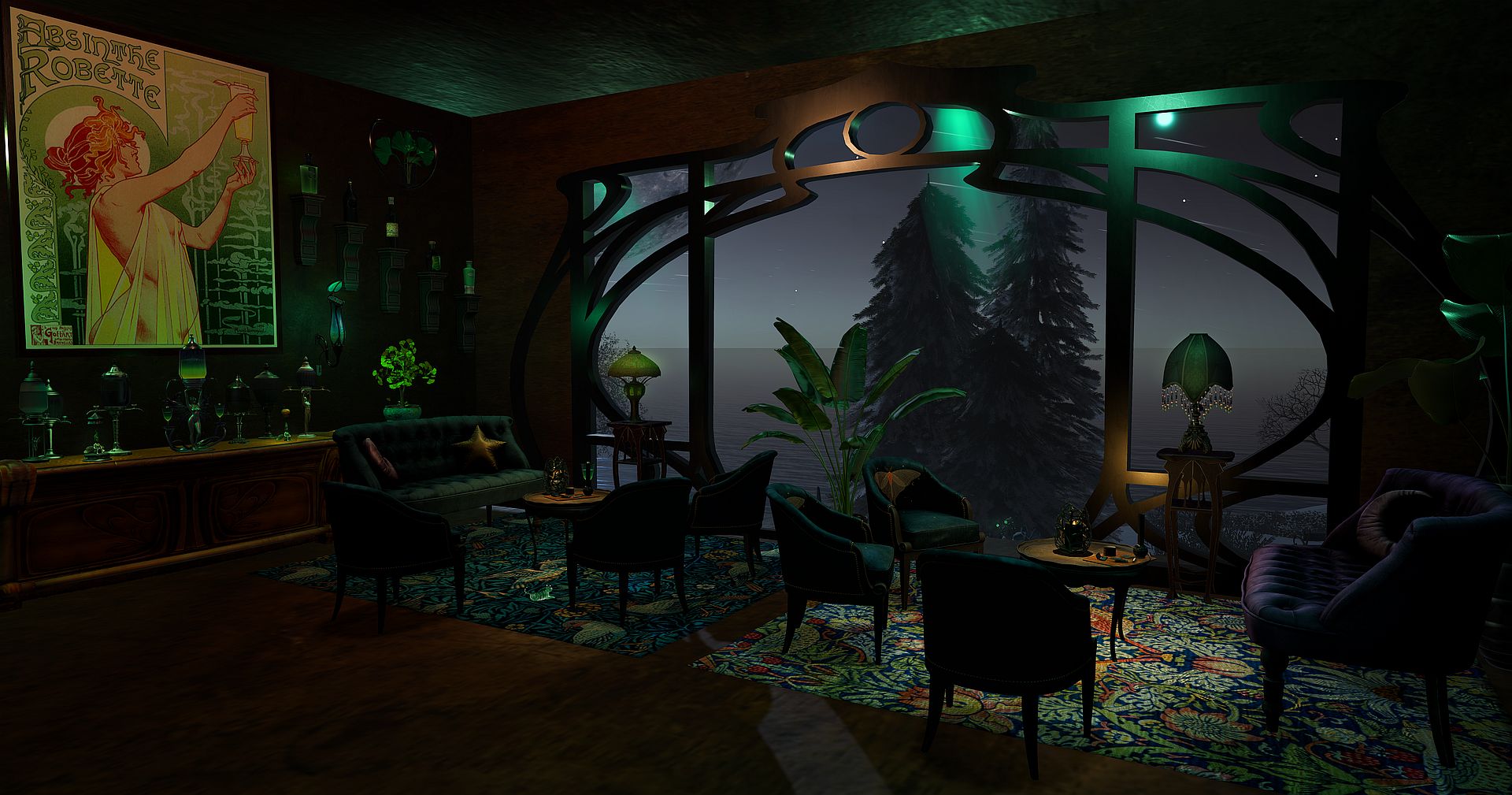
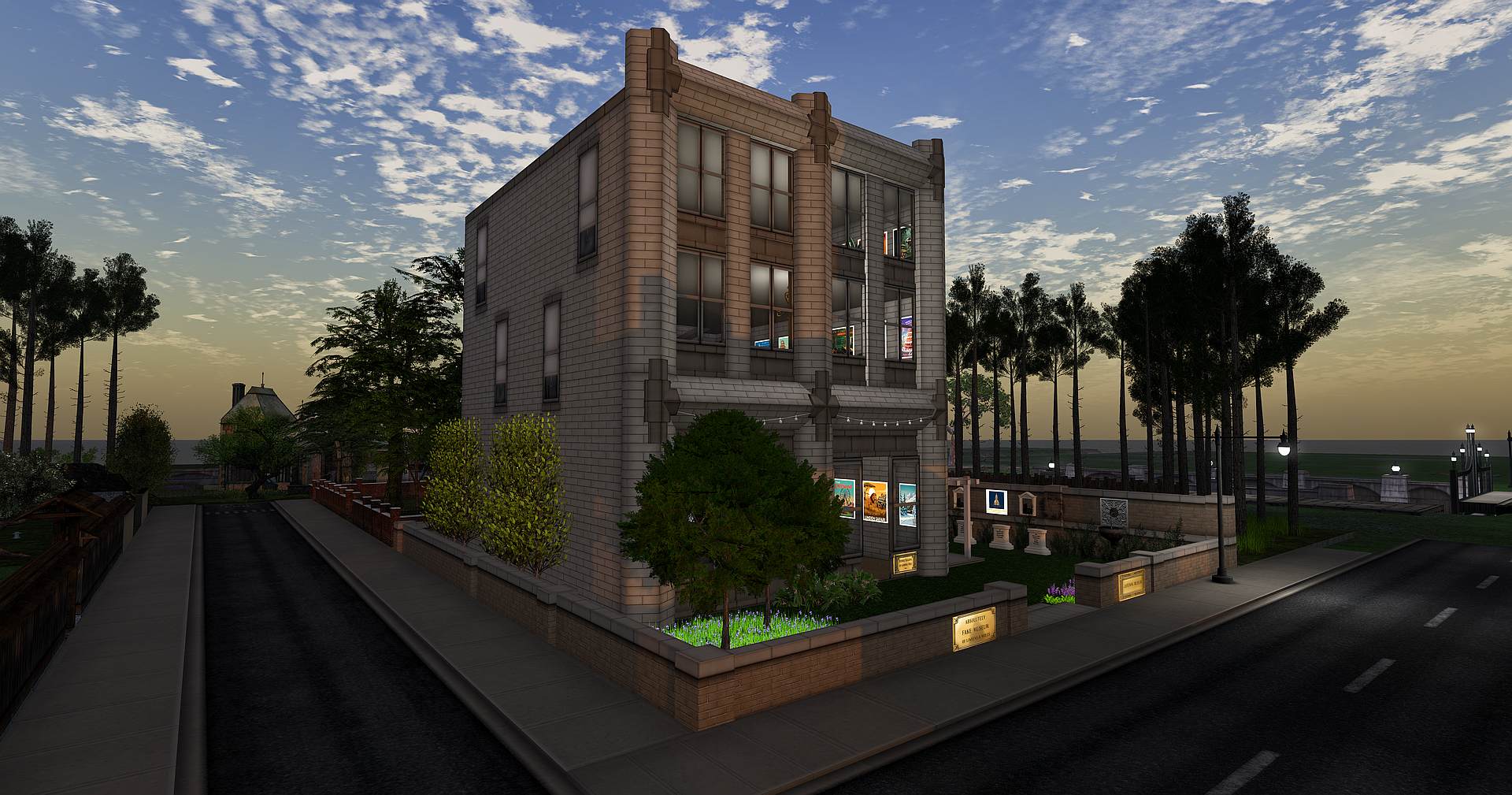
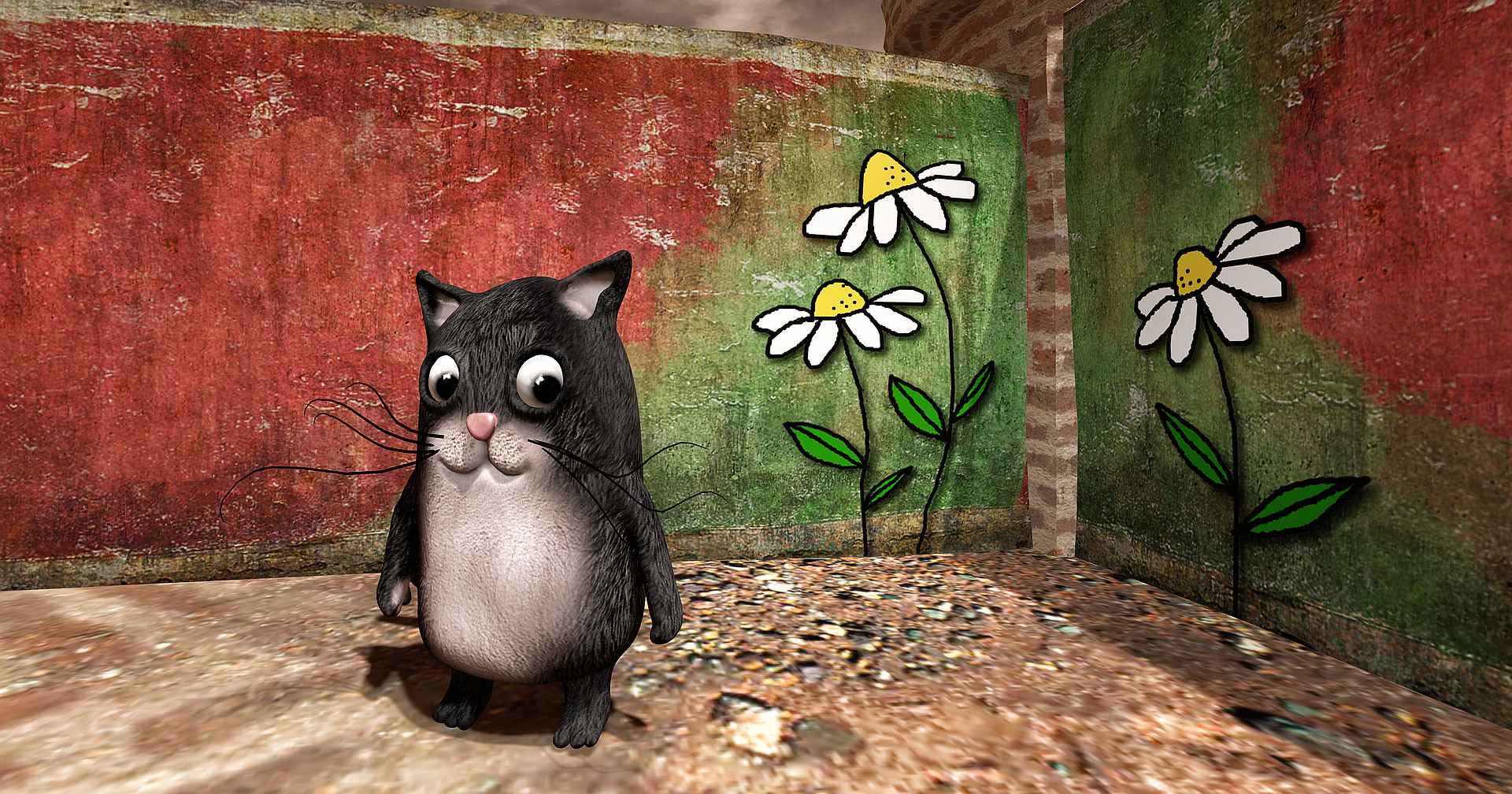
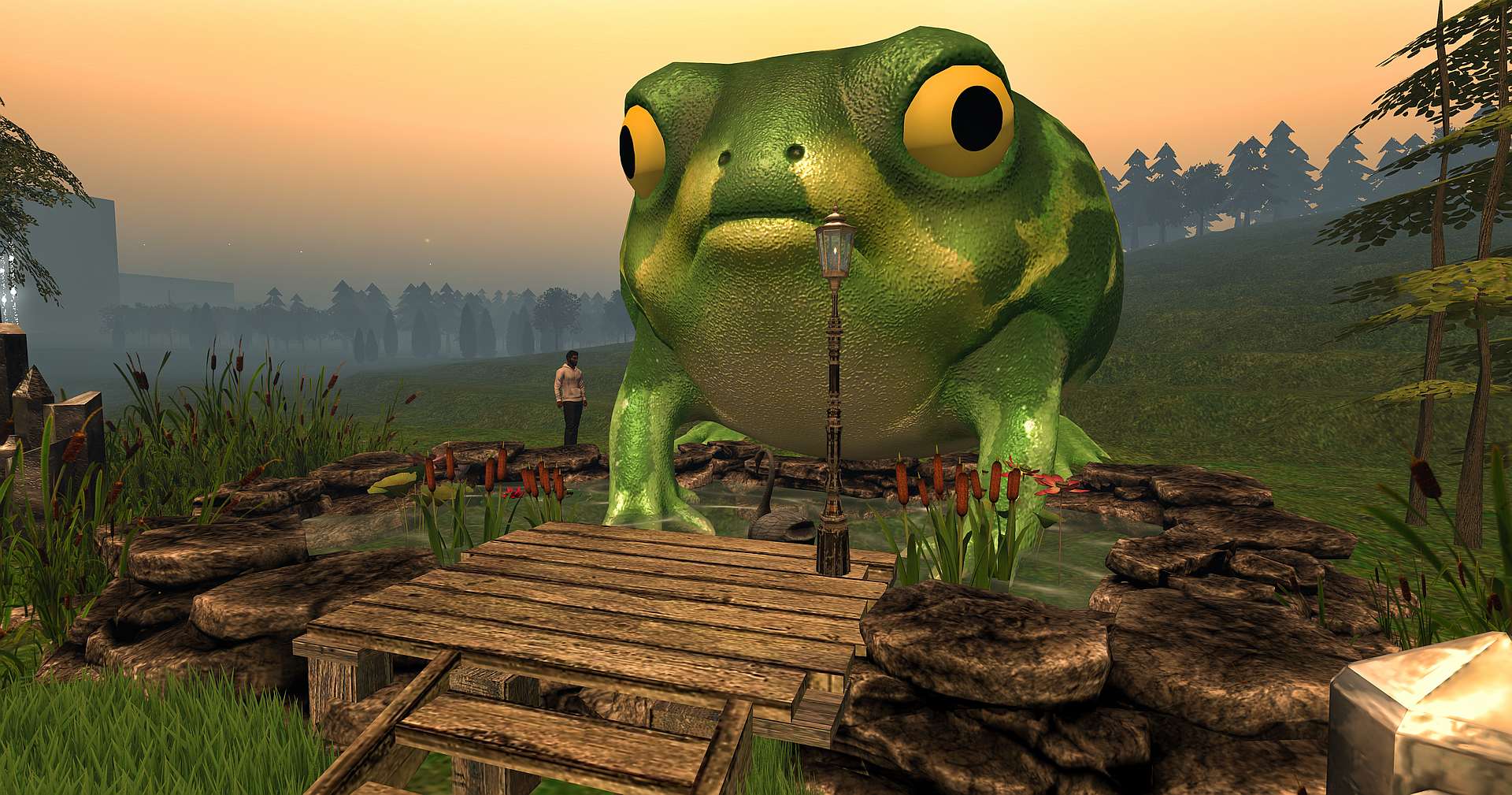
The Blackthorne Book Cafe Second LifeHi Cafe, viewed from Route 3a wall painting at La Fee Verte
If you’d like to see more places like this, follow my blog,Exploring Second Life, where I share both the grand builds and the smaller “quick stops” that make the grid so rewarding.
Second Life is a wonderful place, created entirely from the imagination and creativity of its residents. This blog is about sharing places I find interesting, entertaining, educational, or simply awe-inspiring. It will range from vast, long-standing builds to tiny pop-ups that vanish after a weekend.
In the heart of Da Boom — the very first Second Life region, created in 2002 and long regarded as the centre of the grid at coordinates 1000/1000 — stands a 3D rendition of Salvador Dalí’s Persistence of Memory.
Easily overlooked, this small installation was created in 2008 by Voodoo Shilton, originally for the Primtings Museum. Built entirely in sculpted prims, it recreates Dalí’s melting clocks in interactive 3D form. Visitors can even click the piece and become part of it — “melting” over a tree branch, which makes for a fun photo opportunity.
“For me the melting watches are a metaphor for the relativity of time and space… The artwork as a dream allegory combines new understandings of the universe with the mystical personal experience of the individual.” — Voodoo Shilton
Persistence of Memory – Two Copies, Two Histories
Voodoo Shilton notes in his profile that the artwork now resides at Voodoo Instruments in Nopsaebaram, where another copy can still be found. Both locations are worth a visit, however there’s something especially fitting about encountering it in Da Boom, a region steeped in Second Life’s earliest history.
Da Boom itself has more curiosities and reminders of Second Life’s early days. I hope to return soon and write more about what survives in this historic heart of the grid.
Da Boom the very first region in Second Life
Exploring Second Life
If you’d like to see more places like this, follow my blog,Exploring Second Life, where I share both the grand builds and the smaller “quick stops” that make the grid so rewarding.
There are places in Second Life that don’t so much exist as they glow — worlds built from imagination and the quiet shimmer of light. Lumen Tide Second Life, created by Bisou Dexler as part of The Outer Garden Annex, is one of those rare creations.
The name alone hints at its nature: Lumen, the measure of light, and Tide, the rhythmic pulse of water. Together they suggest a sea where light and darkness move as one — and that’s exactly what you find here.
Sitting surrounded by the lanterns with giant jellyfish overhead
A sea of light and darkness
Lumen Tide is a world of shallow water so dark it’s almost black, yet everywhere touched by colour. Ripples stretch from east to west, their foamy edges tinged with soft blues and reds, like fragments of sunset caught on the surface. Above the water float vast translucent jellyfish — luminous ghosts drifting between sea and sky, sometimes vanishing back into the depths from which they came. Around them rise tiny lanterns and fireflies in gentle motion, each one a moving point of light in the darkness.
crowds of moving giant jellyfish fill the sky
The sky itself is part of the story — near black, with a pale band of light along the horizon. Look east and you’ll see a faint cloud of stardust, perhaps drawn from a NASA nebula, suggesting that the sea below might as well be the sky reflected.
There’s no path, no clear destination. You wander through the water, ankle deep, guided only by curiosity and light. A few small details — a row of fishing chairs, a boat, a pair of geese, whimsical crabs — anchor you just enough to remind you that this is still a dream made by human hands. Sit, and the world continues to move quietly around you.
Fishing rod and animations are provided
Bisou has always been a master of mood, and here he offers something simple yet profound: a visual experience meant to evoke wonder. It’s like a firework display without sound — beauty without noise, designed to make you pause, breathe, and see how light itself can feel alive.
Lumen Tide is open only for October, a fleeting world that will fade like the moonlight it captures. Visit while you can, and take a moment to stand still as the light moves around you.
Visit
The Outer Garden Annex – Lumen Tide Created by Bisou Dexler Open to visitors during October only. Shared environment recommended: Transparent water, Ambient Occlusion, Screen Space Reflections, Mirrors, and Sun/Moon + Projector Shadows enabled.
If you’d like to see more places like this, follow my blog Exploring Second Life, where I share both the grand builds and the smaller “quick stops” that make the grid so rewarding.
Astral Dreams, the beloved steampunk region created by Mina Arcana and Jack Davies, has now closed after seventeen remarkable years on the grid.
It’s always sad to see a long-loved region vanish from Second Life, and this week brings the news that Astral Dreams — for so long a jewel of creativity and community — has disappeared from the map.
First opened in 2008, Astral Dreams became one of Second Life’s most atmospheric steampunk destinations: a place where music, art, and friendship met beneath glowing brass skies. I visited just a few weeks ago to take pictures, but when I returned the next day, the land had already fallen silent.
Mina kindly wrote to explain:
“Hi Sam, unfortunately due to real problems and the little time both I and Jack Davies have to dedicate to Second Life we made this sad decision a few days ago. I find it hard to talk about it, we’ll see about the future. A hug.” — Mina Arcana
Seventeen years is a long life for any virtual world region. Although Astral Dreams has now passed into memory, it remains one of those places that quietly shaped the landscape of Second Life — romantic, creative, and always welcoming.
If you visited Astral Dreams in the past, feel free to share your memories or pictures in the comments below.
If you’d like to see more places like this, follow my blog Exploring Second Life, where I share both the grand builds and the smaller “quick stops” that make the grid so rewarding.
There is a calendar cyclical movement with Second Life regions; October is the time for Autumn pastoral regions , filled with Fall reds, oranges and yellows, and also Halloween builds.
And so it is that Cica Ghost has opened her latest installation on the the 1st October “Happy Halloween”
Cica always pairs her creations with a quote, and this time she’s chosen:
“The only thing we have to fear is FEAR itself… and spiders.”
It’s a playful twist on Franklin D. Roosevelt’s famous words, one that seems to be making the rounds beyond SL
Halloween sims usually mean ghost train rides, dismembered bodies, gore, and jump frights, but Cica being Cica, I knew that I was very unlikely to find such an interpretation,. But I would I be right?
Three cheerful-looking pigs. part of Happy Halloween
The Landing Point – A First Clue
Visitors first arrive on a small circular platform, where Cica gives her usual guidance to use the custom windlight (essential for her creations), alongside a tip jar and links to her Marketplace, Shop & Hop store, and in-world shop. The teleport down to the build is shaped like a gravestone – guarded by a cute two-dimensional smiling spider. Look up, and you’ll even spot another whimsical spider perched on the crescent moon above. Clearly, you’re not heading into a horror show.
Cica Ghost’s Happy Halloween – Second Life
A Monochrome World with Touches of Colour
Down on the island itself, the custom windlight creates a moody, dark environment punctuated by pools of bright light. Much of the world is monochrome, but Cica uses splashes of colour with care: golden star-shaped flowers, earthy orange-brown pumpkins, the green eyes of a monster, and a ginger cat clutched by a red-haired boy. These details stand out all the more against the stark backdrop.
Red-haired boy with ginger cat—not all happy Halloween. is monochrome.
Whimsical Characters, Not Scares
Despite its name, Happy Halloweenis not a frightening place. Even the pumpkin heads, clustered on the eastern side of the island, look more sulky than scary. Instead, the scene is filled with Cica’s trademark whimsy: “spooky boys” and “spooky girls” with stitched smiles recalling Jack Skellington, spooky cats, a skeletal pianist at his piano, a spectral coach and driver, friendly spiders, and countless other curious figures.
A cheerful couple with a coach and horsePumpkin Heads at Happy Halloween
A Place for Fun
It’s also a place to enjoy with friends. When I visited, I came across a couple of avatars having fun together, which felt perfectly in tune with the playful spirit of the region. Like so many of Cica’s builds, Happy Halloween works both as an art installation and as a backdrop for people to make their own light-hearted moments.
Having fun at Cica’s ‘Happy Halloween@
Final Thoughts – A Playful Halloween in Cica’s Style
As always, Cica Ghost fills her world with creatures that charm rather than chill. Happy Halloween is a playful celebration of the season – a monochrome dreamscape, lit with contrast and humour, and unmistakably hers.
The whimsically shaped houses at Critterflop Hallowpop, Second life
If you’d like to see more places like this, follow my blog Exploring Second Life, where I share both the grand builds and the smaller “quick stops” that make the grid so rewarding.